How to Build a Backlink Strategy That Doesn't Involve Buying Links
Backlinks links from other websites pointing to yours remain one of the strongest signals search engines use to evaluate your website's authority and trustworthiness. This has led many website owners toward shortcuts: buying links, participating in link farms, or other schemes that violate search engine guidelines and carry real penalty risk.
Here's how to build genuine backlinks sustainably, without the risk.
Why Backlinks Matter So Much
Search engines treat backlinks as a form of endorsement. When another website links to yours, it's effectively vouching for your content's value or relevance. The more high-quality sites that link to you, generally the more search engines trust your site's authority on related topics.
Not all backlinks carry equal weight. A link from a well-established, relevant website in your industry carries far more value than dozens of links from low-quality, unrelated websites and search engines have become sophisticated at identifying and appropriately weighting link quality.
Why Buying Links Is a Genuine Risk
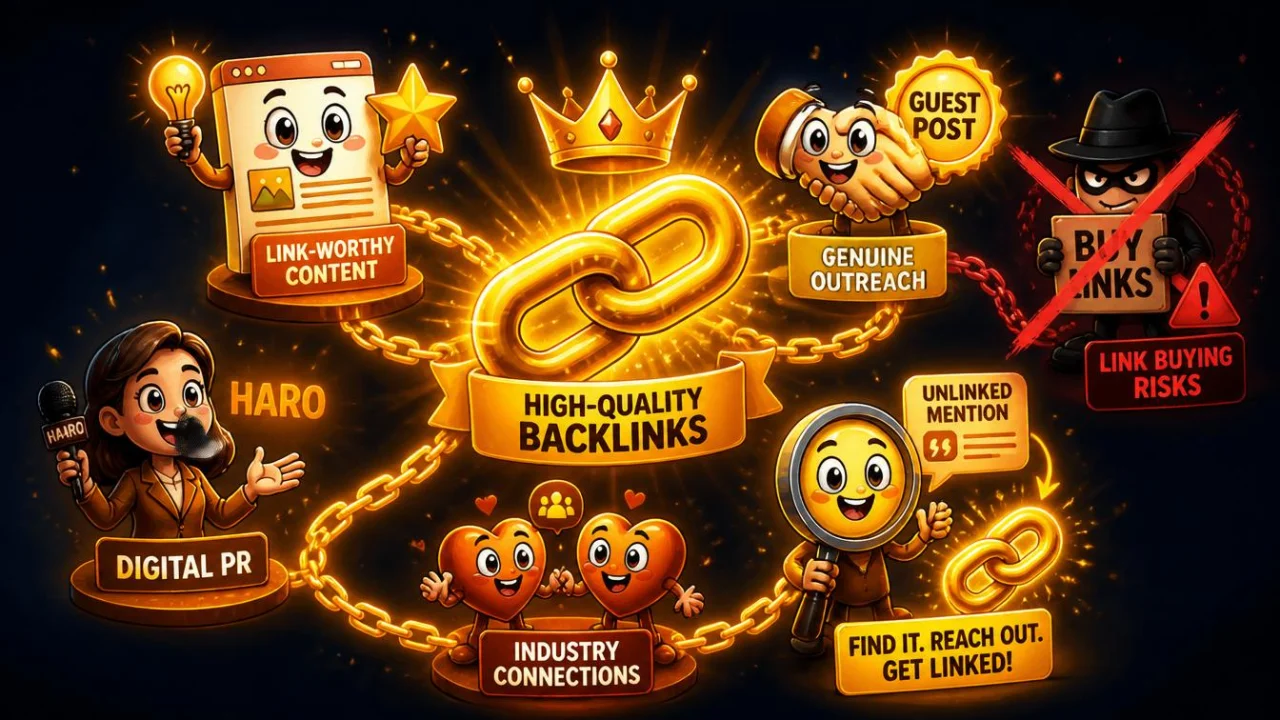
Google's guidelines explicitly prohibit paid links intended to manipulate rankings. Google's algorithms and manual review teams actively identify patterns consistent with purchased links sudden unnatural spikes in backlinks, links from clearly unrelated or low-quality sites, and other red flags.
Websites caught with manipulative link schemes can face significant ranking penalties or, in severe cases, complete removal from search results. The short-term gain from purchased links carries disproportionate long-term risk.
Sustainable Backlink Strategies That Actually Work
1. Create genuinely link-worthy content
The foundation of sustainable link building is creating content that other people naturally want to reference. This includes:
- Original research or data that doesn't exist elsewhere
- Comprehensive guides that become the definitive resource on a topic
- Free tools or calculators that solve a genuine problem
- Well-designed infographics summarising complex information
Content like this naturally attracts links over time because other content creators genuinely want to cite it as a resource for their own audiences.
2. Guest posting on relevant websites
Reach out to websites in your industry (non-competing, but topically relevant) and offer to contribute a genuinely valuable article. Most guest posting arrangements include a backlink to your website within the author bio or naturally within the content.
The key to sustainable guest posting: focus on providing real value to the host website's audience, not just acquiring the link. Websites increasingly reject low-effort guest post pitches that are transparently just link-seeking.
3. Digital PR and journalist outreach
Services like HARO (Help a Reporter Out) connect journalists seeking expert quotes with knowledgeable sources. Providing genuinely useful quotes or data to journalists writing relevant articles often results in a backlink from significant, authoritative publications.
4. Building relationships within your industry
Genuine relationships with other website owners, content creators, and industry figures in your space naturally lead to link opportunities over time mentions in their content, collaborative projects, or reciprocal recognition of each other's valuable work.
5. Resource page and directory listings
Many industries have curated resource pages or legitimate directories listing valuable websites in that space. Identifying and reaching out to be included in genuinely relevant, well-maintained resource pages provides valuable, low-risk backlinks.
6. Reclaiming unlinked mentions
Sometimes other websites mention your brand or content without actually linking to you. Using tools to search for unlinked brand mentions and politely reaching out asking for the mention to be converted into a proper link is a low-effort, often successful tactic.
What to Avoid Entirely
Link farms and PBNs (private blog networks) Networks of low-quality websites created solely to generate backlinks. Google actively identifies and penalises these networks.
Reciprocal link schemes at scale Occasional natural reciprocal linking between genuinely related sites is fine, but participating in large-scale "you link to me, I'll link to you" schemes is a recognisable manipulation pattern.
Comment spam links Leaving links in blog comment sections purely for backlink value, without genuine contribution to the discussion, provides essentially no SEO value and can damage your reputation.
Paid link placements without disclosure Beyond violating search engine guidelines, many jurisdictions also require disclosure of paid promotional content.
A Realistic Timeline
Sustainable backlink building is genuinely slow compared to purchased alternatives this is precisely why it carries far less risk. Expect meaningful backlink accumulation to happen over months, not days. A realistic target for a growing website is 3–5 genuinely valuable, relevant backlinks per month through consistent outreach and content creation efforts.
This pace, sustained consistently over a year, produces a robust, natural-looking backlink profile that provides lasting ranking benefit without the penalty risk that comes with shortcuts.