The Complete Guide to Understanding Search Intent (And Why It's Your Most Important SEO Skill)
You've done your keyword research. You've written a comprehensive article targeting your chosen keyword. You've optimised your title, your headers, your meta description. And yet the page still doesn't rank.
The missing piece is often search intent and it's arguably the single most important concept in modern SEO that gets the least attention.
What Search Intent Actually Means
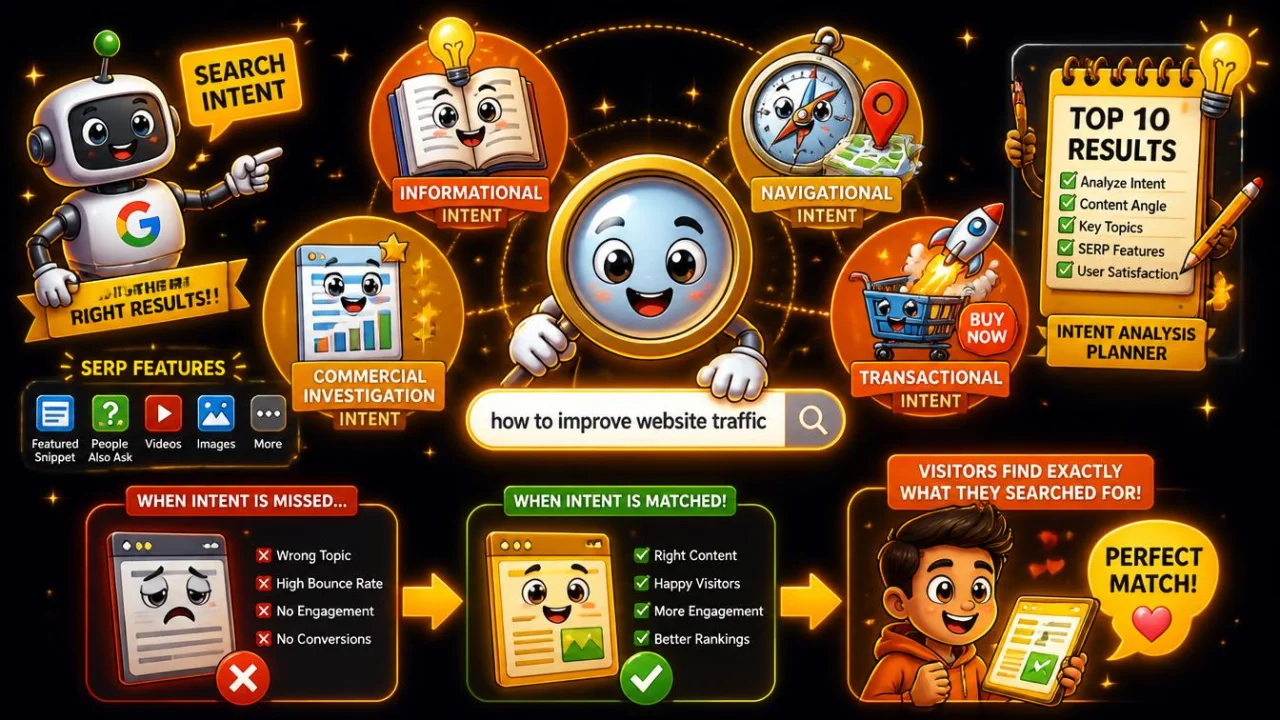
Search intent is the underlying reason behind a search query what the searcher actually wants to accomplish, beyond the literal words they typed.
The same keyword can have different underlying intents depending on subtle context, and Google has become remarkably sophisticated at understanding this nuance. Matching your content to the correct intent is often more important than any other on-page SEO factor.
The Four Types of Search Intent
1. Informational Intent The searcher wants to learn something. They're not ready to buy or take action yet they want understanding.
Examples: "what is dwell time," "how does mobile-first indexing work," "why is my bounce rate high"
Content that matches: comprehensive guides, explainer articles, how-to content, definitions.
2. Navigational Intent The searcher is trying to find a specific website or page they already have in mind.
Examples: "webtraffica login," "google search console," "facebook business manager"
Content that matches: This intent is difficult to rank for unless you own the brand being searched. Not typically a content strategy target.
3. Commercial Investigation Intent The searcher is researching before a purchase decision, comparing options, but not ready to buy yet.
Examples: "best web promotion platforms," "webtraffica vs competitors," "top SEO tools 2026"
Content that matches: comparison articles, reviews, "best of" listicles, feature breakdowns.
4. Transactional Intent The searcher is ready to take action purchase, sign up, download.
Examples: "sign up for web promotion," "buy [product] online," "webtraffica pricing"
Content that matches: product pages, pricing pages, signup pages, clear calls to action.
How to Identify Search Intent for Any Keyword
Method 1: Analyse the current top 10 results This is the most reliable method. Search your target keyword and examine what's currently ranking. If the top results are all comprehensive guides, Google has determined the intent is informational and a product page targeting the same keyword will struggle regardless of optimisation quality.
If the top results are comparison articles and "best of" lists, the intent is commercial investigation. If they're product or pricing pages, the intent is transactional.
Method 2: Examine the SERP features present Google's search results page itself signals intent. "People also ask" boxes and featured snippets typically appear for informational queries. Shopping ads and product carousels signal transactional intent. Google's own algorithm has already done the intent analysis the SERP features reveal its conclusion.
Method 3: Consider the keyword modifiers Certain words strongly signal specific intent types:
- Informational signals: "how," "what," "why," "guide," "tutorial"
- Commercial signals: "best," "top," "vs," "review," "comparison"
- Transactional signals: "buy," "price," "discount," "sign up," "free trial"
Why Mismatched Intent Kills Your Rankings
If you create a heavily commercial, sales-focused page targeting a keyword where searchers actually want an informational guide, your content will underperform regardless of how well-written or optimised it is. Visitors will bounce quickly because the content doesn't match what they were looking for and Google's engagement signals will reflect that mismatch, suppressing your rankings over time.
This is one of the most common reasons well-written content fails to rank: the content itself might be excellent, but it's answering a different question than the one the searcher actually asked.
Matching Content Format to Intent
Beyond just the angle of your content, the format matters too:
For informational intent: Comprehensive, well-structured guides with clear headers, definitions, and practical takeaways. Depth and clarity matter more than persuasion.
For commercial investigation intent: Honest comparisons with clear criteria, pros and cons, and genuine recommendations based on different use cases. Avoid one-sided sales language searchers at this stage are specifically looking for balanced information.
For transactional intent: Clear, concise pages focused on removing friction to action. Pricing clarity, straightforward signup processes, and trust signals (testimonials, guarantees) matter more than extensive content.
Building Content Around Intent Clusters
A sophisticated content strategy addresses all four intent types across a customer's journey with your topic:
- Informational content that establishes your expertise and captures early-stage searchers
- Commercial investigation content that positions your product favourably during comparison research
- Transactional content that converts once the searcher is ready to act
Internal links connecting these pieces guide visitors naturally through their own research and decision journey, on your site rather than a competitor's.
The Quick Intent Check
Before writing your next piece of content, do this simple test: search your target keyword right now and honestly evaluate what's already ranking. If your planned content doesn't match the format and angle of the current top results, you likely have an intent mismatch. Adjust before you write, not after.