Why Content Freshness Matters More Than You Think (And How to Update Old Content Correctly)
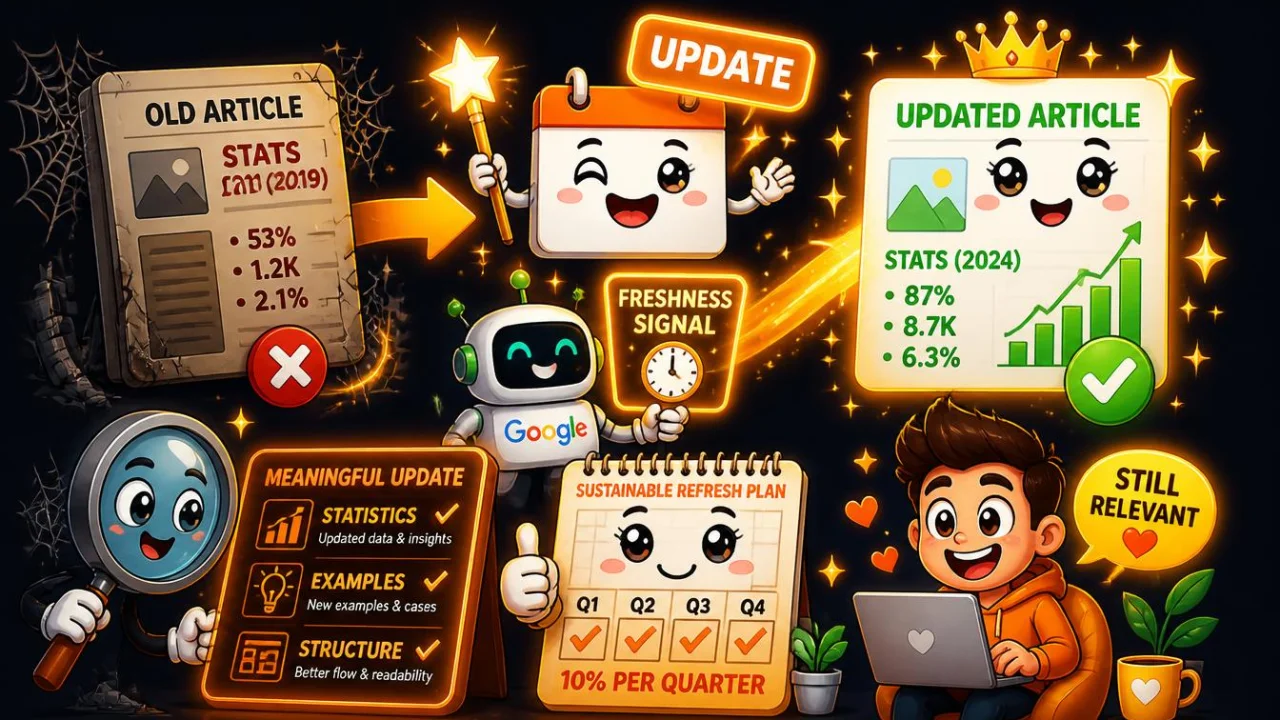
Most website owners focus entirely on publishing new content, while a significant opportunity sits unused in their existing content: strategic updates to older articles. Content freshness is a genuine ranking consideration and one that's far less resource-intensive than constantly producing new content from scratch.
What Content Freshness Actually Means to Search Engines
Google's algorithms consider how recently content has been meaningfully updated as part of their broader ranking evaluation, particularly for topics where currency matters technology, industry trends, statistics, and time-sensitive information.
This doesn't mean every page needs constant updates. Evergreen content on timeless topics doesn't necessarily benefit from freshness signals the way time-sensitive content does. But for a large portion of typical website content, freshness matters more than most owners realise.
The Critical Distinction: Meaningful Updates vs Cosmetic Changes
This is where most people get content freshness wrong. Simply changing the published date on an article without meaningfully updating the content doesn't provide genuine freshness value and search engines have become adept at recognising the difference.
Cosmetic changes that don't count:
- Changing only the publish date
- Fixing a typo or two
- Swapping one image
- Adding a single new sentence
Meaningful updates that genuinely count:
- Adding substantially new information or sections
- Updating statistics, data, or examples to current figures
- Expanding shallow sections with genuine depth
- Removing outdated information that's no longer accurate
- Restructuring content based on new understanding of the topic
Which Content Should You Prioritise for Updates?
Pages that were once ranking well but have declined. Check Google Search Console for pages with declining impressions or clicks over the past 6–12 months. This often indicates content that's become stale relative to competing, more recently updated pages.
Content with outdated statistics or examples. Anything referencing "current" data, prices, or trends from more than a year ago is a strong candidate for updating.
Pages ranking in positions 5–15. These pages are close to page-one visibility but not quite there. A meaningful content update can be the push needed to move them into stronger positions.
High-traffic pages approaching a year without updates. Even strong-performing content benefits from periodic review to ensure continued accuracy and comprehensiveness.
How to Update Content Effectively
Step 1: Read the entire piece as a new visitor would. Before making any changes, genuinely evaluate whether the content still fully serves someone searching for this topic today. What would a comprehensive, current answer include that this doesn't?
Step 2: Update statistics and examples first. This is usually the fastest, highest-impact update. Outdated numbers immediately signal to readers (and indirectly to search engines through engagement patterns) that content may be stale.
Step 3: Expand thin sections. Look for sections that feel underdeveloped compared to the rest of the article. Add genuine depth, examples, or context.
Step 4: Add newly relevant subtopics. Has the topic evolved since you originally published? Are there new angles, tools, or considerations worth including?
Step 5: Improve the internal linking. Since you likely published newer, related content since this piece went live, add contextual internal links connecting them.
Step 6: Reconsider the meta description and title. If your original title or description isn't performing well in Search Console, this is a natural moment to test an improved version.
Establishing Renewed Engagement After Updates
Once you've meaningfully updated a piece of content, it benefits from renewed visibility and engagement much like a newly published piece. Sharing the update through your email list and social channels helps. For pages that need a stronger initial push, connecting the updated content with a community promotion platform like WebTraffica can help establish fresh engagement signals that support the content's re-evaluation.
A Practical Content Refresh Schedule
For a sustainable approach, consider auditing roughly 10% of your published content every quarter prioritising pages identified through the criteria above. This keeps your existing content library continuously improving without requiring you to abandon new content production entirely.
Over a year, this systematic approach touches nearly every significant piece of content on your site at least once — keeping your entire library genuinely current rather than accumulating an ever-growing pile of aging, increasingly irrelevant pages.