Internal Linking Strategy: The Free SEO Tactic Most Websites Get Wrong
Every website owner obsesses over backlinks getting other websites to link to them. Meanwhile, one of the most powerful and completely free SEO tools sits unused within their own website: internal linking.
Here's why internal linking deserves far more attention than it typically gets.
What Internal Linking Actually Does
Internal links are links from one page on your website to another page on the same website. They serve two critical functions:
For search engines: Internal links help search engine crawlers discover and understand the relationship between pages on your site. A page with many internal links pointing to it signals importance. A page with no internal links pointing to it might barely get crawled at all.
For visitors: Internal links guide readers to related content, keeping them engaged with your site longer and reducing bounce rate which itself feeds back into your search rankings.
The Most Common Internal Linking Mistakes
Mistake 1: Only linking from the navigation menu Your main navigation is important, but it's not internal linking strategy. True internal linking happens within your actual content contextual links placed naturally as you write.
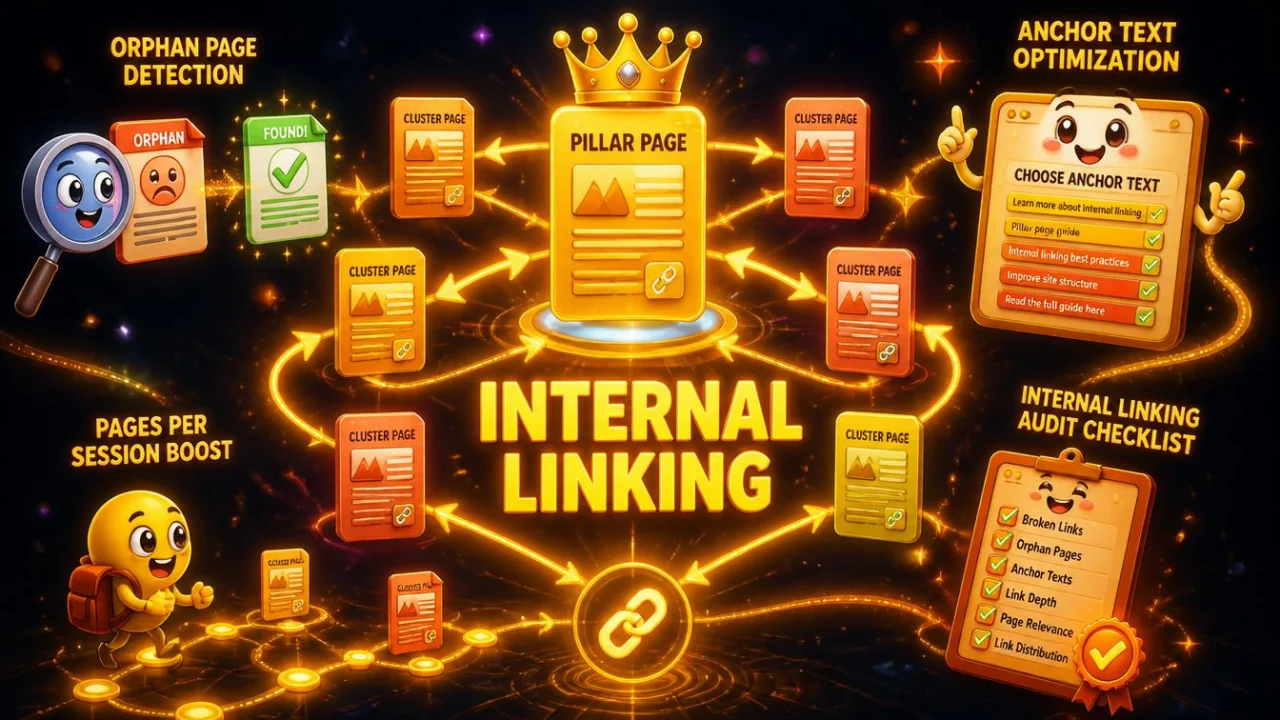
Mistake 2: Orphan pages An orphan page is a page with zero internal links pointing to it from anywhere else on your site. Search engines struggle to find and properly evaluate orphan pages. Audit your site regularly for these.
Mistake 3: Over-optimised anchor text Using the exact same keyword-stuffed anchor text for every link to a page looks unnatural to search engines and reads awkwardly to human visitors. Vary your anchor text naturally.
Mistake 4: Linking without purpose Adding internal links just to hit a quota, without genuine relevance to the reader, creates a poor experience and dilutes the value of your linking strategy. Every internal link should serve the reader first.
Building a Genuine Internal Linking Strategy
Step 1: Identify Your Pillar Content Your pillar pages are your most comprehensive, most important pieces the content you most want to rank well. Every other related piece of content on your site should link back to these pillar pages where relevant.
Step 2: Create Topic Clusters Group your content into clusters around each pillar topic. Every supporting article within a cluster links to the pillar page, and ideally links to 2–3 other related supporting articles within the same cluster.
This structure helps search engines understand your site's topical organisation clearly, and it keeps readers moving through genuinely related content.
Step 3: Add Contextual Links While Writing As you write new content, actively look for natural opportunities to link to existing relevant pages. This is more effective than retroactively adding links, because contextual relevance is clearer when the link emerges naturally from what you're writing.
Step 4: Regularly Audit Older Content Every few months, review your older articles for internal linking opportunities to newer content. Older pages often have accumulated some authority passing internal links from them to newer pages helps those newer pages gain traction faster.
Step 5: Use Descriptive Anchor Text Instead of "click here" or "read more," use anchor text that describes what the linked page is about. "Learn about improving your bounce rate" tells both readers and search engines exactly what to expect.
How Many Internal Links Is Too Many?
There's no fixed rule, but a useful guideline: every internal link should genuinely help the reader. A 1,500-word article might reasonably include 3–6 internal links. If you're adding more than that, examine whether each one is truly adding value or just padding for SEO purposes.
The Engagement Connection
Internal linking directly influences the engagement metrics search engines evaluate. When a reader clicks through to a second, third, or fourth page during a single visit, your pages per session and average session duration both improve both meaningful engagement signals.
This connects directly to broader engagement strategy: strong internal linking, combined with quality content and genuine visitor engagement (including community promotion during the early stages of new content), creates a compounding effect. Visitors explore more, search engines see stronger engagement signals, and rankings improve as a result.
Your Internal Linking Audit Checklist
Take 30 minutes this week to:
- List your 3–5 most important pillar pages
- Search your site for related content that doesn't currently link to these pillars
- Add natural, contextual links from that related content
- Check for any orphan pages using Google Search Console's coverage report
- Fix any generic "click here" anchor text with descriptive alternatives
This is one of the highest-return, lowest-effort SEO tasks available and it costs nothing beyond your time.